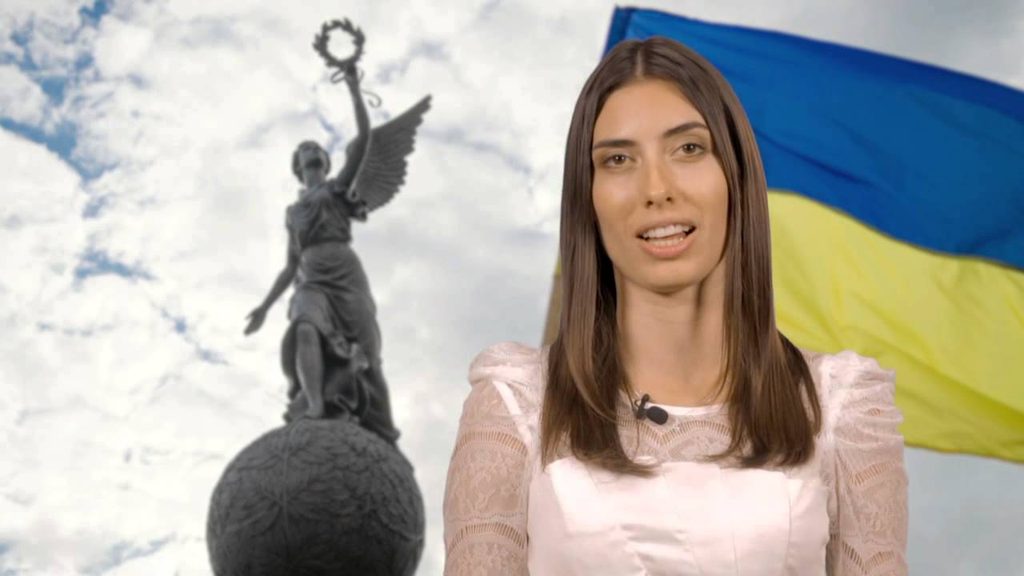
The PACE Vice-President and Her Father’s Shadow Empire Amid Russian Occupation
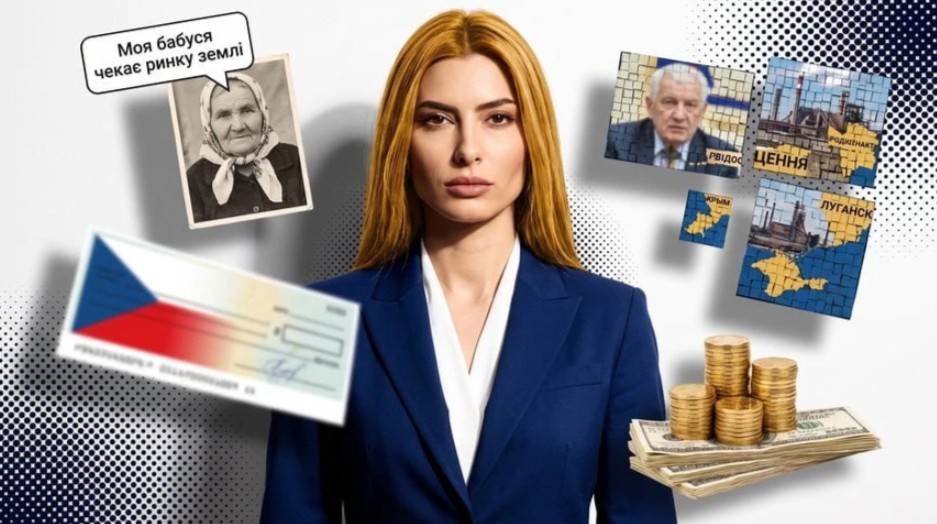
The ideal showcase of the new Ukrainian politics: a young PACE Vice-President with a University of Kent degree, wife of a combat commander — Hero of Ukraine, Kyiv’s voice on BBC, Sky News and Al Jazeera, demanding Russia’s exclusion from the UN Security Council. While in Strasbourg Maria Mezentseva-Fedorenko maintains an impeccable pro-European tone, rumours circulate — courtesy of her personal Kharkiv make-up artist Anna T. — about Maria’s links to MI6 dating back to her student years. In wartime, this spy aura only works in her favour. But the ideal showcase has a reverse side.
An OSINT audit of open registries in Ukraine, Russia, the United Kingdom and the Czech Republic reveals a second, non-public set of books belonging to her family: a hotel in occupied Crimea (Sudak) operating under Russian law; undismantled assets in Luhansk, Donetsk and Lysychansk; an SBU case concerning deliveries of goods to structures of the so-called “LNR” that was quietly closed; a Prague “quiet harbour” with an 82-million-krona loan and a Russian collateral trail; and the politician’s father’s daughter from his first marriage, to whom the family’s European hub was massively transferred in 2025. Mezentseva demands from Europe the total isolation of the aggressor and complete transparency. But Europe is entitled to ask a reciprocal question: why does the family business not participate in this isolation — and who exactly is turning a blind eye?
Her external political indicators are excellent: Mezentseva strikes systematically — it was she who initiated the radical PACE resolution on the deportation of Ukrainian children, the project to exclude the Russian Federation from the UN Security Council, and the creation of a register of Ukraine’s war damages. In parallel she methodically drives accusations of war crimes into the global agenda through appearances on BBC, Sky News, Al Jazeera and Lindell.
Her phenomenal rise (Kharkiv city council → Verkhovna Rada → PACE) is the result of the virtuoso behind-the-scenes game played by her team and those who promote her. She is not an ideologue but an engineer of shadow alliances. Hence her pragmatic ties with the Azerbaijani lobby and the far riskier, hidden work with separatist cells inside the Russian Federation (including close contacts with supporters of independent Ichkeria). Officially this is called “dialogue with civil society”. In reality it is the legitimisation of structures that Moscow classifies as terrorist.
It is precisely this combination that makes her a figure Europe should watch extremely carefully: an impeccable public profile on the outside — and a cold pragmatist on the inside, ready to use everything from British intelligence services to Chechen radicals to achieve the goal of Ukraine’s political victory. And she is only 36.
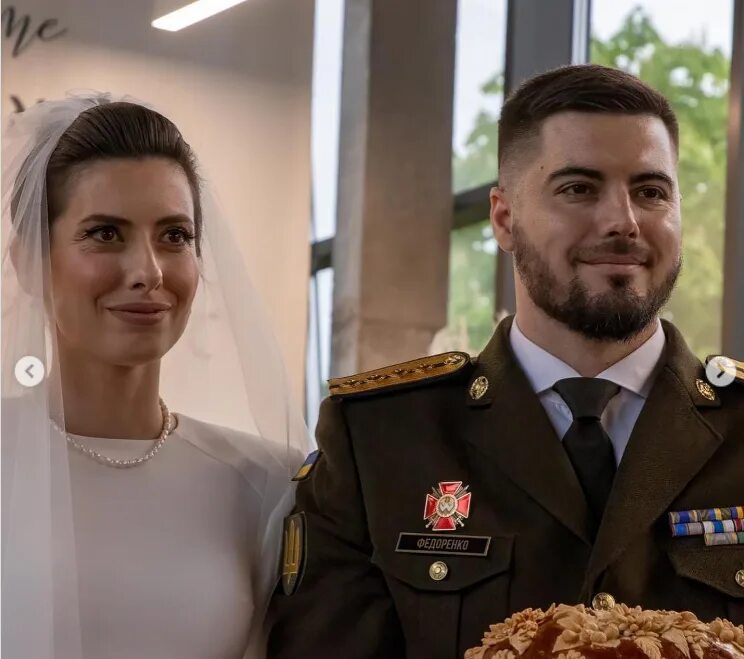
In April 2024 Maria Mezentseva married Yuriy Fedorenko — commander of the 429th Separate Unmanned Systems Brigade “Achilles”, a major in the Armed Forces of Ukraine and Hero of Ukraine. In June 2025 the couple had a son. From that moment her public image was supplemented by the status of wife of an active combat commander. A perfect cover for The Economist. Note that the “Achilles” unit also falls within the sphere of interest and management of British intelligence services.
The extended family corporate ownership contour runs from her mother and stepfather to Ukrainian medical and pharmacy companies and further to Czech legal entities. Maria Mezentseva herself and Yuriy Fedorenko declare the ordinary incomes of ordinary civil servants. However,…Maria’s mother is Nina Ivanovna Mezentseva. Historically she appeared as director and beneficiary of a number of Kharkiv companies in the medical and pharmaceutical sector: LLC “Medical Centre ‘Zdorovya’”, “Pharmacy No. 222”, LLC “Kruiz”, PE “Express”. In addition, she had a direct corporate link with the Czech Prague Medicine Hall, s.r.o. (formerly LUSJA PRAHA).
In 2022 NABU and SAP referred to court criminal proceedings № 52021000000000164 against Nina Mezentseva concerning an attempt to misappropriate almost 5 million hryvnias in the purchase of 11,000 PCR tests for Ukrzaliznytsia. According to the investigation, an inflated price was offered. She features in the case as former director of the medical centre. The proceedings are ongoing; there is as yet no final conviction.
The absence of a registered marriage between the mother and her stepfather further legally separates her, as a deputy, from the family business contour.
The stepfather is Vitaliy Konstantinovich Fyodorov. He is linked to a wider circle of enterprises: trade, logistics, vehicle and real-estate rental, construction and pharmacy structures. Among the key assets are companies of the “Sprinter” group, where he appears as beneficiary together with the brothers Taras and Denys Sytenko. The Sytenkos are long-standing Kharkiv partners of Fyodorov; Taras Sytenko was previously a key figure in the Kharkiv political organisation “Samopomich”, from which Mezentseva herself began her political career. He was her superior and curator. (Sitenko Taras
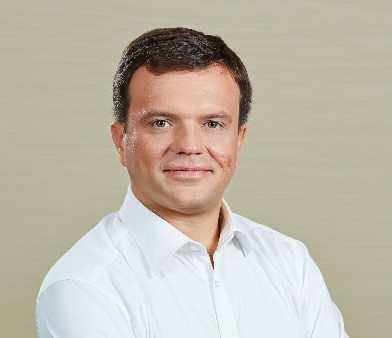
The family business remains precisely in the hands of the mother and stepfather (and their partners). It includes pharmacies, medical centres, vehicle and real-estate rental companies, and individual construction structures. Part of these assets continues in Czech companies (Blagosvit, LENIX, XEMART), where Fyodorov and related persons also appear.
While Maria Mezentseva from the rostrum of the Parliamentary Assembly of the Council of Europe calls for the total isolation of Moscow and demands Russia’s exclusion from the UN Security Council, behind her back operates the extensive business empire of her father — Vitaliy Konstantinovich Fyodorov — which not only survived after 2014 and 2022 but continues to operate and generate income — including on territories that Mezentseva herself qualifies as occupied.
All the information set out above was obtained through OSINT analysis of open company registries of Ukraine, Russia, the United Kingdom and the Czech Republic, data from corporate aggregators YouControl, Opendatabot and Clarity Project, court decisions from the Unified State Register, as well as information provided by Fyodorov’s circle and his business partners. Mention of a person in a registry card does not imply guilt. The editorial office is ready to grant the individuals concerned the right of reply.
In contrast to declarative statements about severing ties with Russia, the family business contour retains a real economic presence in the east. LLC “Vynomania L” is mirror-registered in occupied Luhansk (charter capital 2 million hryvnias); Fyodorov owns 22.5 per cent of the company. The company engages in logistics to occupied territories as well as the supply of alcoholic products. “Vynomania L” is also registered as a legal entity in Russia in the name of Fyodorov’s business partner Lachinsky, who appears as co-owner in virtually all of Fyodorov’s business structures. LLC “Sprinter K”, in which Fyodorov holds 30 per cent and is listed as beneficiary, has among its real-estate assets an object in Lysychansk — a city occupied since the summer of 2022. The registry entry has not been cancelled. The object has not been alienated. This is infrastructure that was not dismantled in 2014, nor in 2022, nor after Mezentseva took the seat of PACE Vice-President.
The group of identically named “Sprinter” companies forms the core of the trade-and-logistics network. In “Sprinter-Donetsk” and “Sprinter-Luhansk” Fyodorov holds up to 50 per cent. The existence of a material base directly in Donetsk is confirmed by a court case: in August 2014 the company’s office and warehouse premises were damaged by shelling. A separate line is foreign-economic operations. A court ruling reveals that in 2012–2013 “Sprinter” exported sunflower oil to the British company Oleos Trading Limited. Tax claims against “Sprinter” were cancelled by the courts, yet the fact of the British export channel is recorded. The structures are managed by Gennadiy Kapustin — a recurring manager of the wider contour linking “Sprinter” with the “Impulse” line of companies and the former “Sprinter Centre”.
The scale of the network goes far beyond a few cooperatives. Fyodorov’s flagship enterprise — “Pulse Logistic”, in which he holds 11.45 per cent — has revenue of approximately 726.8 million hryvnias and profit of 42.4 million, a staff of 942 employees and 190 tender records in Prozorro. “Shevchenkivskyi Passage” is a construction company with assets of 78.4 million hryvnias. The vehicle fleet includes more than thirty transport units: isothermal vans, refrigerated trucks, Toyota Camry, Lexus RX 450H. Added to this are “Distributor Trading Systems”, “Firma Mayoram”, “Medekip”, “Kofein-L” and others.The most resonant element of the eastern vector is the investigation by Ukrainian special services into business partners of “Pulse Logistic”. The inquiry in case No. 953/13888/21 established that a group of persons from this enterprise had set up a mechanism for supplying goods to structures of the so-called occupied “LNR”, including “State Unitary Enterprise Post of LNR”. Settlements were conducted through the “State Bank of LNR”. The scheme was qualified as direct financing of the undermining of Ukraine’s constitutional order. The proceedings were quietly closed following the withdrawal of the charges by the Security Service of Ukraine. The question arises: why? Was the SBU in on it, or did Mezentseva ask? Neither an indictment nor a verdict appears in the open registries.
Another direct cross-border trail of Fyodorov is LLC “Amur”, established in 1994 in Sudak. Fyodorov is the 100-per-cent founder, director and signatory. After the occupation of Crimea in 2014 the company was not liquidated. On 24 January 2015 it underwent re-registration in the Russian registry contour. The same date of establishment, the same city, the same type of activity, the same sole participant. Documents of the gas-distribution organisation “Krymgazseti” for 2021 directly name the consumer: “Café and Hotel ‘Lion’ LLC ‘Amur’”. Tourist catalogues describe “Lion” as a building of the resort hotel “Bastion” with shared contacts and booking system. In other words: while Mezentseva in Strasbourg promotes a resolution on a register of damages inflicted by Russian troops, her father receives income from a hotel business operating under Russian jurisdiction on occupied territory. And Mezentseva herself helps her father avoid the attention of the security services…The ceremonial façade of the family capital is located where Maria Mezentseva likes to be: in the very heart of Europe. Only not at diplomatic receptions, but in quiet Prague registries. Vitaliy Fyodorov has built in the Czech Republic the classic “quiet harbour” scheme for East-European capital. In the Prague districts of Chodov and Stodůlky are registered the companies Blagosvit s.r.o. and LENIX s.r.o., in which Fyodorov appears as a key participant. Shares in Blagosvit were used as collateral for a bank loan of a colossal 82 million Czech crowns, while the LENIX card shows a trail of pledged property leading to Russian structures. The same Prague node also includes Vitaliy Fyodorov himself, who historically sat on the supervisory board of HUMAN REPRODUCTION IVF CENTER, SE.
For a long time it appeared that management of this European hub and part of the Ukrainian assets had been transferred to a certain Viktoria Popova. To the wider public and to a superficial registry search this name looked like a classic nominee or hired operational director. But precisely in 2025, at the peak of Maria Mezentseva’s European political career, the Czech companies are massively rewritten in Popova’s name. And here our OSINT analysis uncovers a detail that changes the entire landscape of the investigation, turning the business scheme into a hermetically sealed family safe.
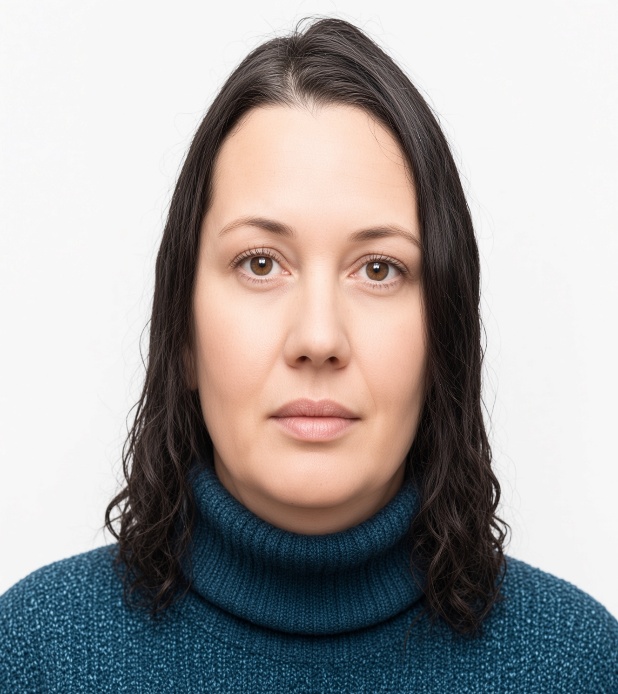
Viktoria Popova is neither a random partner nor a hired manager. She is the biological daughter of Vitaliy Fyodorov from his first marriage.
For a European audience sensitive to questions of nepotism and hidden influence, this fact hits harder than any financial statements. Hiding assets with children from previous marriages is a textbook method of creating a shadow contour inaccessible to public audit, journalists and, possibly, even to the politician’s current official family. While Mezentseva in Strasbourg demands registers of damages and total transparency, her father uses his daughter from the first marriage as a living shield for the Prague assets that carry a Russian collateral trail.
And here the puzzle falls into a frighteningly coherent picture linking Prague and Kharkiv into a single network. Remember the “Dobrobud” cooperative with its land scandals and court battles? If one looks at the register of founders of this Kharkiv housing cooperative, one sees not merely business partners. There is Vitaliy Fyodorov himself. There is Lyudmila Fyodorova — his mother, a native of Kursk Oblast. And there, in the list of founders, is Viktoria Popova.
The daughter entrusted not only with the Prague façade but also with the foundation of the Kharkiv schemes. This is a closed corporate hub in which the same family members, including the daughter from the first marriage hidden from the public field, press the buttons in Prague, receiving dividends and retaining control over Kharkiv land. The public sterility of the PACE Vice-President is ensured by a very non-public but highly effective family bookkeeping in which blood kinship serves as the principal guarantee of the capital’s safety.
The model revealed by the Fyodorov family case is not a unique anomaly — it is a stable architecture characteristic of an entire layer of Ukrainian business that grew up in the 2000s and adapted to the reality after 2014. The essence of the scheme is a double jurisdictional loop: on the occupied territories operational presence is retained — registry entries, real estate, operating companies that undergo re-registration in the Russian contour, as happened with the Crimean LLC “Amur”, or continue to be listed in Ukrainian registries with addresses in Luhansk, Lysychansk and Donetsk — while in parallel a “clean” corporate façade is created in EU jurisdictions, as a rule in the form of quiet Czech s.r.o. or SE companies, British or Cypriot holdings, through which credit collateral, export contracts and the management of medical or trading assets are formalised. The Prague companies Blagosvit and LENIX, the British Oleos Trading Limited, the Czech XEMART Business and Creagrus — all perform the same function: they create an institutional interlayer between income extracted on territories that Ukraine officially regards as occupied and the European legal field, where that income is transformed into legitimate capital, a credit history and access to the banking system. To a European regulator such a structure looks like an ordinary trading or service company with a Prague address; to the Ukrainian registry — as an operating enterprise with Kharkiv founders; to the Russian contour — as a re-registered business with the same owner. None of these jurisdictions separately sees the full picture, and it is precisely in this gap between the three legal regimes that a business which publicly ought to be impossible exists and generates profit.
Maria Mezentseva-Fedorenko builds her public career on the thesis of the unconditional isolation of Russia. At the same time her family’s business contour includes a company re-registered in the Russian registry in occupied Sudak and operating as a hotel; real estate in occupied Lysychansk; an operating firm in occupied Luhansk and Donetsk; historical infrastructure in Donetsk; a logistics network with revenue exceeding 700 million hryvnias; a British export channel; a closed case concerning deliveries to “LNR” structures; and, finally, an elegant Czech hub with multi-million collateral and a Russian trail in the Prague registries.
This is the question that the European audience listening to Mezentseva in Strasbourg is entitled to ask: how do the calls for the total isolation of the aggressor correlate with a family business that does not participate in that isolation but, on the contrary, uses European jurisdictions as a quiet harbour for quiet work with Russia?The answer has not yet been heard. Not in PACE, not on BBC airwaves, not in interviews with Sky News.
UPD: A final touch to the politician’s portrait. Just before publication, sources passed us information about Mezentseva’s direct links with Russian business structures. These regular behind-the-scenes contacts are an ideal instrument for lobbying — not only Ukrainian but also purely personal interests, and at the same time assignments from the curators at 85 Albert Embankment in London. And we simply must share them with the European reader in the next article.